You get one chance to make your Upper East Side co-op shine. From pricing to presentation to the board package, small choices stack up to a faster sale and stronger offers. This guide gives you a clear, step-by-step plan tailored to UES co-ops so you can list with confidence, avoid delays, and protect your net proceeds. Let’s dive in.
The UES market right now
Buyers on the Upper East Side compare by building, layout, and condition. Recent neighborhood data shows a median listing price near $1,712,500 and a median time on market around 97 days. That pace rewards accurate pricing and clean presentation.
Many Manhattan deals close with significant cash, especially at higher price points. As a seller, you should expect offer terms to vary by down payment strength and financing. Your best approach is to price to the building’s comps, present beautifully, and make it easy for qualified buyers to clear the board.
Prep that pays: focus on the basics
Most UES co-ops do not need a full renovation to sell well. Focus on what buyers see and touch.
- Declutter and deep clean. Remove extras, edit closets, and streamline shelves. Clear counters and simplify art.
- Fix visible defects. Address peeling paint, loose hardware, squeaky hinges, and sticky windows.
- Refresh lighting and paint. Choose warm white bulbs and clean, neutral wall colors.
- Make targeted kitchen and bath updates. Refacing cabinet doors, swapping dated fixtures, and replacing worn counters can shift a buyer’s perception without over-investing. National benchmarks show surface-level improvements often deliver better return than gut jobs. See Remodeling’s Cost vs. Value for typical ROI ranges at Cost vs. Value.
Staging is a proven lever. The National Association of Realtors reports a median staging cost around $1,500, with many agents seeing quicker sales and offer premiums after staging. Photos and virtual tools also have an outsized impact on buyer interest online. You can review those findings in NAR’s 2025 staging profile summary at NAR’s staging impact.
Prewar layouts: keep charm, remove noise
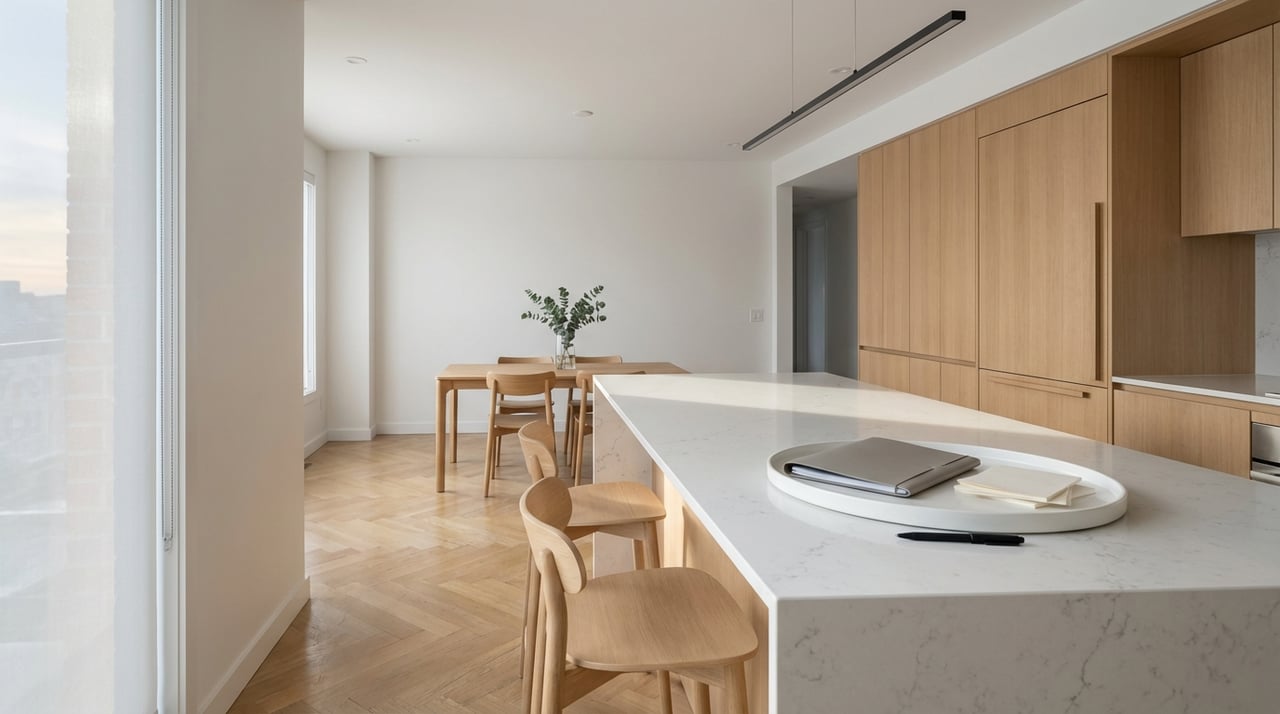
If your co-op has prewar details, preserve them and tone down anything visually heavy. Fresh paint in a light, neutral palette lets moldings and herringbone floors stand out. Remove oversized or custom built-ins that tighten the space. Aim for broad appeal over personalization.
Marketing that moves buyers
Strong visuals drive showings. Budget for professional photography and, if useful for your layout, a floor plan and short video or virtual tour. NAR’s research highlights how photos and virtual tools influence buyer engagement, so this spend usually pays back in traffic and time on market. See the summary here: staging and media influence.
Your listing copy should spotlight measurable positives: light exposure, window count, ceiling height, storage, and condition of building systems. Avoid subjective language and let the facts and images do the heavy lifting.
Make the board package effortless
A UES co-op sale has two tracks at once: the contract and the board review. You control your side by negotiating terms, but your closing timeline depends on the buyer producing a clean, complete board package. Help your buyer succeed by providing a clear checklist and sharing building documents early.
Here is what most boards expect to see, organized the way they like it:
- Cover sheet and brief summary: buyer names, price, down payment amount and source, target closing date.
- Signed contract of sale.
- Completed co-op application and building forms.
- Government ID for each purchaser.
- Financials: two years of signed tax returns, W-2s or 1099s, recent pay stubs, three months of bank and brokerage statements, retirement statements showing post-closing liquidity, and an employment verification letter if requested.
- Mortgage items if financing: pre-approval or commitment and any required lender questionnaire.
- Reference letters: professional, personal, and prior landlord if applicable.
- Proof and explanation of funds: gift letters or notes explaining large deposits or transfers.
- Credit authorization and any required tax transcript forms.
- Entity documents if buying via a trust or LLC.
Boards commonly delay or reject packages that are incomplete, inconsistent, or unclear. Practical tips from co-op veterans stress accuracy, consistency, and simple explanations for large deposits. For a helpful overview of pitfalls, see this board-package explainer.
Interview etiquette and fair housing rules
Boards can ask about finances and building rules. They cannot ask about, or make decisions based on, protected characteristics under federal, state, or NYC law. New York City’s Fair Chance Housing rules also limit when and how criminal history can be considered, typically after a conditional approval. Review the NYC Commission on Human Rights guidance at NYC Human Rights.
Pricing, flip taxes, and your net proceeds
Price to your building and block. A broker comparative market analysis should highlight recent resales in your line, adjust for maintenance and any assessments, and account for your building’s transfer or flip tax policy. Buyers on the UES compare carrying costs closely, so higher maintenance can require sharper pricing.
Most NYC sellers budget roughly 8 to 10 percent of the sale price for closing costs. This often covers broker commission, seller legal fees, New York State transfer tax, New York City Real Property Transfer Tax, and building-level fees. Actual costs vary by building policy and your contract.
- NYC Real Property Transfer Tax applies to the transfer of co-op shares. Rates are set by the Department of Finance. Learn how RPTT works at NYC DOF RPTT overview.
- New York’s mansion tax, paid by buyers for purchases at or above $1 million, can shape price sensitivity in higher brackets. See a helpful summary of transfer taxes at NYC transfer tax basics.
Flip taxes are building-specific transfer fees. Structures vary: a percentage of price, a percentage of profit, a per-share fee, or a flat number. Who pays depends on your proprietary lease, bylaws, and your contract. Because enforceability turns on governing documents and proper adoption, discuss your building’s policy with your attorney early. For legal context on transfer-fee disputes, see Weigel v. 30 W. 15th St. Owners.
Quick net-proceeds worksheet
Use this simple outline to estimate your bottom line, then confirm with your attorney and accountant.
- Contract price
- Minus broker commission (commonly 5 to 6 percent)
- Minus NYC and NYS transfer taxes
- Minus flip tax if you are responsible under building rules or contract
- Minus seller legal fees and building admin or move fees
- Minus any mortgage payoff and UCC-3 termination costs
Example: On a $1,700,000 sale, an 8 to 10 percent closing-cost budget equals $136,000 to $170,000 before any flip tax and payoff amounts. Your actual number depends on your building and contract terms.
Your 6 to 12 month sale timeline
Anchored to today, Feb 16, 2026, here is a practical plan. Adjust as needed.
Six-month plan to list Aug 16, 2026
- Feb 16 to Apr 16, 2026: Interview listing brokers, run a CMA, pull your proprietary lease, bylaws, offering plan, and house rules. Ask the managing agent to confirm any flip tax, move fees, and current assessments. Start decluttering and plan light updates.
- May 2026: Complete high-ROI refreshes like paint, lighting swaps, hardware, and minor kitchen or bath surface updates. Line up a stager and photographer for late July.
- Jun 2026: Finalize pricing strategy and marketing plan. Prepare seller disclosures and gather building docs to share with buyers for their packet.
- Jul 2026: Stage, photograph, and produce floor plans. Tighten pricing based on July comps.
- Week of Aug 16, 2026: Go live. Host broker and public opens. When you accept an offer, ask the buyer to begin the board package immediately and provide your building docs to speed review. Expect a 2 to 6 week board review window before closing.
Twelve-month plan to list Feb 16, 2027
- Mar to Jun 2026: Same early steps as above, with more time to plan improvements and spread costs.
- Jul to Oct 2026: Complete targeted updates and any handyman punch list. Monitor comps quarterly and adjust your plan.
- Nov 2026 to Jan 2027: Stage, shoot, and finalize pricing for a February launch when listings often refresh after the holidays.
- Feb 16, 2027: List and follow the same board-packet strategy to keep the timeline tight.
Who to hire and when
- Experienced Manhattan co-op broker: 6 to 12 months out for pricing, marketing, and building-rule insights.
- NYC real estate attorney: engage at offer stage and consult in advance on flip taxes, transfer requirements, and disclosures.
- Stager and photographer: 2 to 3 weeks pre-list.
- Contractor or handyman: schedule during Months 2 to 4 before listing for quick, visible fixes.
- Accountant or CPA: helpful if you need to explain tax records or gift funds in a buyer’s packet.
Show-ready checklist
Use this quick list before every showing or open house.
- Clear all surfaces and tuck away small appliances.
- Edit furniture to improve flow. Remove oversized pieces.
- Make beds with neutral linens. Add simple pillows or a throw.
- Brighten the space: open shades, turn on all lights.
- Add small, fresh touches: a bowl of lemons, a single vase with branches.
- Hide trash cans and pet items. Secure valuables.
- Set a comfortable temperature and quiet background ambiance.
Common pitfalls to avoid
- Over-improving for the neighborhood. Big, bespoke renovations often deliver lower percentage ROI than modest, neutral refreshes. See ROI benchmarks at Cost vs. Value.
- Waiting to confirm the flip tax or restrictions. Building rules and fees influence both pricing and net proceeds.
- Submitting a sloppy board packet. Missing pages, inconsistencies, and unexplained deposits create delays and rejections. For a refresher on what trips packages up, read this guide to board packages.
- Crossing fair-housing lines. Keep interviews focused on finances and house rules, and follow NYC Fair Chance timing for background checks. See NYC Human Rights.
Next steps
You do not need to navigate this alone. A strong plan, clean presentation, and board-ready process can pull real dollars forward and cut weeks from your timeline. If you are thinking about selling in the next 6 to 12 months, let’s map your building-specific strategy and pricing.
Ready to start? Connect with Iryna Ferenets to build your tailored UES sale plan and get your instant home valuation.
FAQs
What makes a UES co-op sell faster in 2026?
- Accurate pricing to recent building comps, strong staging and photography, and helping the buyer deliver a clean, complete board package.
How much should I budget for seller closing costs?
- Many NYC sellers plan for roughly 8 to 10 percent of the sale price, plus any building flip tax and mortgage payoff, then confirm exact figures with their attorney.
Do NYC transfer taxes apply to co-op shares?
- Yes, the NYC Real Property Transfer Tax applies to cooperative share transfers; see the Department of Finance overview for rates and filing details.
What is a co-op flip tax and who pays it?
- A building-level transfer fee that can be a percentage of price, profit, per-share, or flat; payment responsibility is set by building documents or negotiated in the contract.
How long does the co-op board process take?
- Packet prep can take days to weeks, and board review often runs 2 to 6 weeks before interviews; plan buffers so your contract closing date is realistic.
Should I renovate before selling my UES co-op?
- Focus on high-ROI, surface-level refreshes like paint, lighting, hardware, and minor kitchen or bath updates rather than full gut renovations for broader appeal.



