Looking at a Ridgewood two-family home and wondering if you can live in one unit while renting the other? You are not alone. Ridgewood offers a very specific kind of owner-occupant opportunity, but the details matter more here than in many other neighborhoods. If you want to understand how Ridgewood housing stock, financing, tenant rules, and renovation limits can affect your plan, this guide will help you focus on the checks that matter most. Let’s dive in.
Why Ridgewood stands out
Ridgewood is not a typical duplex market. Much of its housing stock comes from early-20th-century development, and many properties take the form of attached or semi-attached brick rowhouses, two-family houses, and flats buildings rather than simple suburban-style side-by-side duplexes. That pattern is documented across Ridgewood’s historic districts, including Central Ridgewood, Ridgewood North, Ridgewood South, and Stockholm Street, on the NYC Landmarks Preservation Commission’s Queens historic district page.
For you as a buyer, that means layout and legal use may not always be obvious from a listing photo or floor plan. A building may look like a classic two-family from the street, but the real question is how it is legally configured and whether that matches current use. In Ridgewood, that distinction is especially important.
What a Ridgewood two-family often looks like
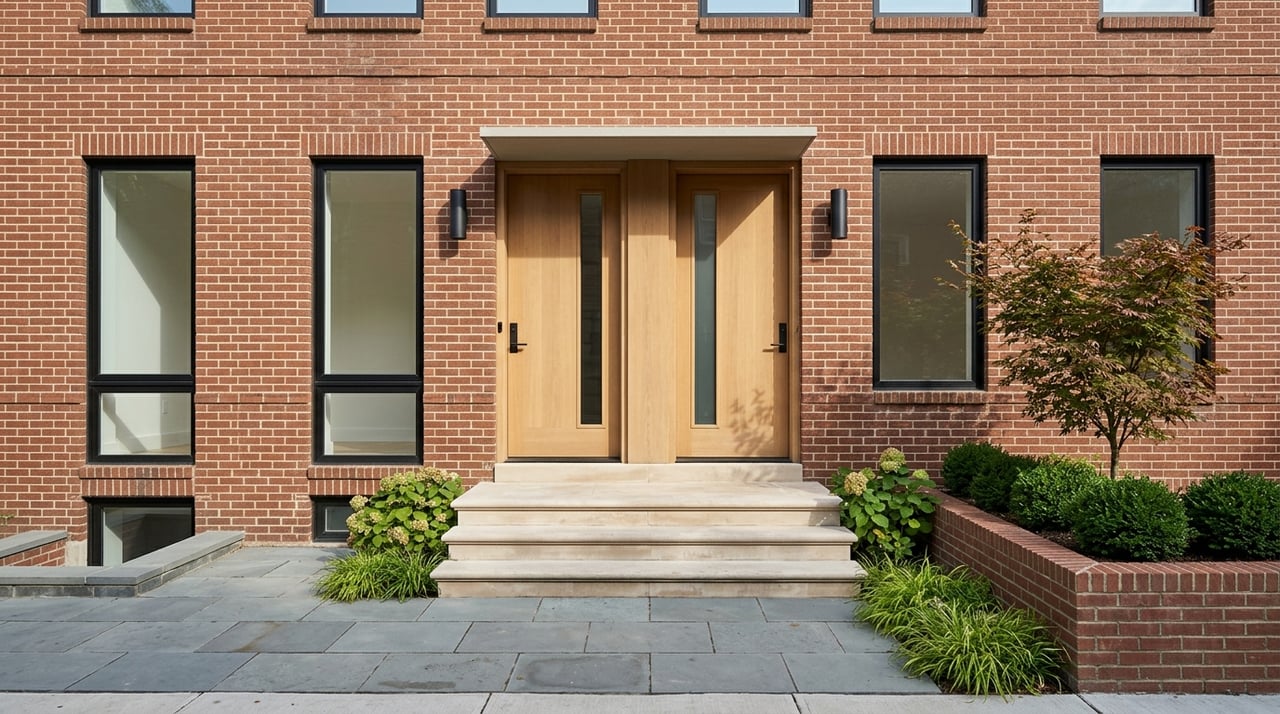
Many Ridgewood properties reflect older attached-building design. In Central Ridgewood, district records describe rows of two-family row houses with basements, stoops, and detailed brick, stone, and iron facades. In Ridgewood North, the Mathews Model Flats were designed with two apartments on each floor and private bathrooms, which shows how varied the neighborhood’s multi-unit housing forms can be.
That variety creates opportunity, but it also means you should avoid assumptions. A property marketed as a two-family may have a stacked-flat layout, basement space, or a configuration that needs closer review before you treat the second unit as a reliable rental strategy.
Check legal occupancy first
Before you build your budget around rental income, verify that the property can be legally occupied the way it is being presented. The NYC Department of Buildings advises buyers and tenants to confirm legal occupancy and review permits and violations through BIS and DOB NOW.
This is one of the most important steps in Ridgewood. If you are buying an older attached building, you want to confirm the legal unit count, review building history, and understand whether any alterations were properly filed. That protects you from discovering after closing that a unit is not legal, not leasable as expected, or tied to unresolved violations.
Ridgewood has an active resale market
Two-family homes in Ridgewood are not just a niche product. The Queens Finance 2024 annual sales report includes multiple Ridgewood two-family dwelling transactions, which shows there is real resale activity in this segment.
That matters because active turnover helps support pricing discovery and buyer interest. If you are comparing Ridgewood with other Queens neighborhoods, it is useful to know that owner-occupant-friendly multifamily homes are part of an established resale market here.
Owner-occupant financing basics
For many buyers, the appeal of a Ridgewood two-family home is simple: you live in one unit and use rent from the other to help offset carrying costs. That can work, but financing rules depend on the property type, unit count, and your occupancy plan.
FHA options for 2- to 4-unit homes
According to the Consumer Financial Protection Bureau’s FHA overview, FHA loans can require as little as 3.5% down. FHA can also apply to multi-unit properties of up to four units if you are buying the entire building and living in one of the units.
Another key point is that FHA loan limits are higher for duplexes and other multi-unit properties than for one-family homes. But FHA loans also require mortgage insurance, so your monthly payment analysis should go beyond the purchase price alone.
Conventional low-down-payment paths
If you are looking at conventional financing, Fannie Mae’s HomeReady product matrix allows 2- to 4-unit principal residences and can work for qualified buyers at or below 80% of area median income. Fannie Mae also notes borrower contribution rules for higher loan-to-value transactions.
Outside HomeReady, standard conventional financing for 2- to 4-unit owner-occupied properties may still be available, but your cash contribution and underwriting will depend on the specific loan structure. This is where early conversations with a lender can save you time.
Mortgage insurance affects affordability
If you put less than 20% down on a conventional loan, mortgage insurance usually becomes part of the picture. Freddie Mac explains that borrowers with under 20% down generally need private mortgage insurance.
That is why your affordability review should include:
- Principal and interest
- Property taxes
- Homeowners insurance
- Mortgage insurance, if applicable
For an owner-occupant buyer, this bigger payment picture is much more useful than focusing only on list price.
Can rental income help you qualify?
Yes, in some cases it can. Fannie Mae’s rental income guidance specifically addresses borrowers who occupy one unit in a 2- to 4-unit principal residence.
Depending on the transaction, lenders may use leases, tax returns, or market-rent documentation to evaluate rental income from the non-owner-occupied unit. This can be a major benefit if you are stretching to buy in Ridgewood, but it only works well when the unit is legal, documented, and underwritten correctly.
Tax relief may help with carrying costs
If the property will be your primary residence, New York’s STAR program is also worth knowing about. The New York State STAR program page explains that Basic STAR is available for owner-occupied primary residences, and Enhanced STAR may apply for eligible senior homeowners who meet income rules.
This will not replace a full affordability review, but it is one more reason occupancy status matters. For some buyers, tax relief can improve the long-term carrying-cost picture after closing.
Tenant rules matter in an occupied two-family
If the property you are buying has a tenant in place, treat that as a formal legal and operational issue, not an informal handoff. Owner-occupant buyers sometimes assume a small building means simple rules. In New York City, that is not the right approach.
Good Cause exemption for many small owner-occupied buildings
The New York State Attorney General’s Good Cause Eviction guidance states that the law broadly applies, but it does not cover an owner-occupied building with 10 or fewer residential units. A typical owner-occupied two-family may therefore fall outside Good Cause.
Still, that does not mean you can ignore lease terms, notice requirements, or lawful procedures. It simply means the legal framework may differ from that of a larger non-owner-occupied rental property.
Self-help evictions are not allowed
Even if a small owner-occupied building is exempt from Good Cause, you still cannot use self-help. The Attorney General’s unlawful eviction guidance says people who have lawfully occupied a dwelling unit for at least 30 days are protected from unlawful eviction, and lockouts or utility shutoffs can be criminal.
For you as a buyer, this means that inherited tenancy situations should be reviewed carefully before closing. If your plan depends on future occupancy changes, written process and legal guidance matter.
Security deposits must be transferred properly
If you buy a Ridgewood two-family with a tenant already in place, there are also rules around security deposits. NYC guidance says the landlord must transfer security deposits to the new owner within five days of the transfer or return them to tenants, and tenants must be notified of the new owner’s name and address, according to the NYC tenants’ rights guide.
This is the kind of detail that can get missed in a rushed transaction. It is one more reason to approach an occupied two-family as a document-driven purchase.
Renovation plans need extra review
Many buyers see a Ridgewood two-family as both a home and a value-add project. That can make sense, but your renovation flexibility may be more limited than expected.
Historic district rules can affect exterior work
Parts of Ridgewood fall within designated historic districts, including Central Ridgewood, Ridgewood North, Ridgewood South, and Stockholm Street. The Landmarks Preservation Commission says that most exterior changes to front and rear facades in historic districts require review, though ordinary repairs like repainting to match or replacing broken window glass generally do not.
If you are planning to enlarge, alter, or reconfigure visible exterior elements, this matters right away. A property’s historic district status should be part of your due diligence before you count on a renovation timeline or budget.
ADU plans are not automatic
NYC now allows one accessory dwelling unit on a one- or two-family home in some cases, but the rules are not universal. The city’s ADU FAQ page notes that ADU rules exclude historic districts and certain other locations, and backyard ADUs are prohibited in historic districts.
In Ridgewood, that means any ADU idea needs a site-specific zoning and landmarks review before it becomes part of your buying strategy. In other words, do not assume extra future income from an ADU unless that possibility has been checked carefully.
The three checks that matter most
If you are serious about buying a Ridgewood two-family as an owner-occupant, keep your focus on three core questions.
1. Is the second unit legal and leasable?
Review legal occupancy, permits, and violations through DOB resources. Make sure the building can be occupied as presented and that the rental unit is not just a casual or outdated setup.
2. Does the financing fit your plan?
Confirm whether your loan program works for the unit count, occupancy structure, and available documentation for rental income. Low-down-payment options may exist, but payment structure and underwriting details matter.
3. Are there renovation or tenant limits?
Check whether landmark rules affect exterior work and whether tenant status changes your timing or use plan. If the property is occupied or in a historic district, your next steps may be more structured than you first expect.
Buying a live-in two-family in Ridgewood can be a smart move when the property, financing, and legal setup all align. The key is to evaluate it as both a home and an income-producing asset, with clear eyes on documentation and carrying costs.
If you want help evaluating Ridgewood two-family homes, comparing owner-occupant scenarios, and coordinating the moving parts with lenders and attorneys, Iryna Ferenets can help you approach the process with clarity and confidence.
FAQs
What makes Ridgewood two-family homes different from suburban duplexes?
- Ridgewood two-family homes are often older attached or semi-attached rowhouse-style buildings or stacked-flat layouts, so legal configuration and actual use should be verified carefully.
Can you use an FHA loan to buy a Ridgewood two-family home?
- Yes, FHA loans can apply to properties with up to four units if you buy the whole building and live in one unit, and they may allow a down payment as low as 3.5% for qualified buyers.
Can rental income from a Ridgewood two-family help you qualify for a mortgage?
- Yes, lenders may be able to count rental income from the non-owner-occupied unit when it is properly documented through leases, tax returns, or market-rent support, depending on the transaction.
Do historic district rules affect renovations on Ridgewood two-family homes?
- Yes, if the property is in a Ridgewood historic district, many exterior changes to front or rear facades may require Landmarks review before work begins.
Are owner-occupied Ridgewood two-family homes covered by Good Cause Eviction?
- A typical owner-occupied building with 10 or fewer residential units usually falls outside Good Cause, but lease terms, notices, and other landlord-tenant rules still apply.
Can you add an ADU to a Ridgewood one- or two-family home?
- Maybe, but not automatically. ADU rules exclude historic districts, and backyard ADUs are prohibited in historic districts, so the site needs a specific zoning and landmarks review.