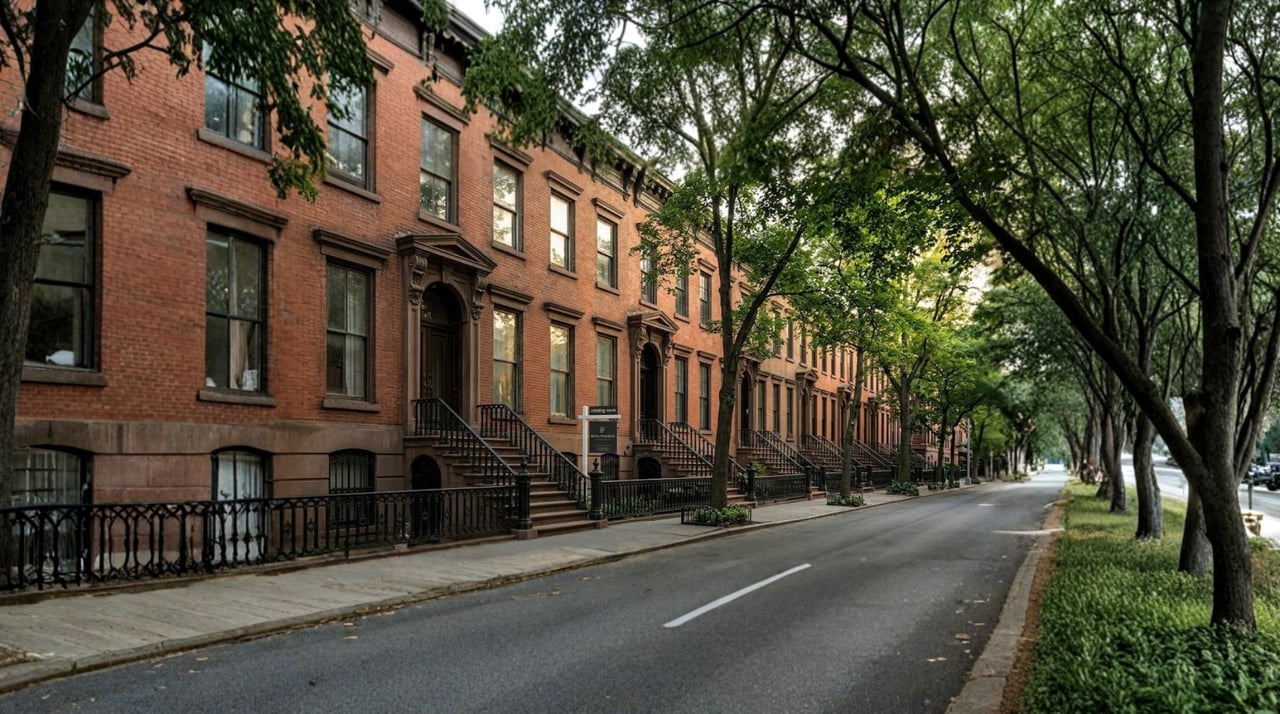
The "Ready-to-Renovate" Opportunity in Brooklyn’s Historic Districts
Balancing historic integrity with modern infrastructure: How discerning buyers and legacy sellers are unlocking unprecedented equity in Brooklyn's premier townhouse micro-markets.
While Manhattan's skyline continues its vertical ascent, another luxury real estate narrative is quietly dominating the historic horizontal blocks across the East River. In Brooklyn's premier landmarked neighborhoods, a fascinating divergence has emerged. Modern buyers are demonstrating a profound, uncompromising preference for move-in-ready, turnkey single-family townhouses. Yet, the extreme scarcity of these immaculate homes has highlighted a highly lucrative counter-strategy: the "ready-to-renovate" opportunity.
Why Value is Shifting to "Bones" Over Finishes
The contemporary townhouse market operates in a two-speed rhythm. Fully renovated properties in prime neighborhoods routinely command record-breaking premiums, often sparking intense bidding wars within their first week on the market. This surge is fueled by a desire to bypass the rising costs, supply chain logjams, and extended timelines associated with major residential construction.
However, this exact dynamic has created a significant pricing disconnect—and a massive window of opportunity. Properties that retain their original layouts, historic details, and outdated mechanical systems are trading at a compelling relative discount.
For the analytical buyer, purchasing a "ready-to-renovate" brownstone allows you to capture a rare entry point into a premium neighborhood. By controlling the renovation process, you ensure that every dollar invested directly reflects your personal lifestyle requirements, from advanced wellness infrastructure to custom floor plates, while capturing the substantial equity delta upon completion.
Neighborhood Spotlight: Brooklyn's Historic Havens
The value of a historic renovation opportunity is intimately tied to its geographic surroundings. In Brooklyn, landmark status acts as a permanent economic buffer, preserving the character of the streetscapes and insulating property values over time.
District / Neighborhood | Architectural Signature | Key Renovation Drivers & Trends |
Brooklyn Heights | Federal & Anglo-Italianate rowhouses | High demand for wide single-family restorations. |
Park Slope | Late Victorian & Romanesque Revival | High priority on parlor-floor flow and garden access. |
Cobble Hill & Carroll Gardens | Greek Revival & Italianate townhomes | Premium placed on extra deep lots and custom rear extensions. |
Fort Greene & Clinton Hill | Eclectic Italianate & Neo-Grec frames | Strong attraction from design-forward, arts-centric buyers. |
The Gold Standard: Brooklyn Heights and Park Slope
As one of the city's most prestigious enclaves, Brooklyn Heights boasts a protected streetscape where wide-plate townhouses are highly coveted. Investors and buyers look for homes with intact structural integrity that can accommodate modern luxuries like private elevators and multi-floor primary suites.
Further south, Park Slope continues to see intense interest from buyers who value proximity to Prospect Park. Here, the "ready-to-renovate" focus centers on opening up traditional parlor floors to maximize natural light while preserving historic plaster moldings and pier mirrors.
The Deep-Lot Advantage: Cobble Hill and Carroll Gardens
In Cobble Hill and Carroll Gardens, rowhouses often feature unusually deep lot configurations. This unique geographic attribute allows buyers to work within local zoning laws to design dramatic glass rear extensions, seamlessly blending indoor living with meticulously landscaped private gardens.
The Design-Forward Renaissance: Fort Greene and Clinton Hill
Fort Greene and Clinton Hill have become major epicenters for creative, high-net-worth individuals. The brownstones here feature grand proportions and eclectic architectural details, making them highly desirable for custom, architect-led restorations that celebrate historical soul alongside minimalist interior aesthetics.
Navigating the Landmarks Preservation Commission (LPC)
Purchasing a property within a designated NYC historic district adds a layer of regulatory oversight that requires professional navigation. The New York City Landmarks Preservation Commission (LPC) is tasked with protecting the architectural history of these neighborhoods, meaning any alterations to the exterior of the building must be reviewed and approved.
🏛️ The LPC Golden Rule: Exterior vs. Interior
It is a common misconception that landmark designation paralyzes construction. The LPC’s oversight is primarily focused on the exterior facade visible from a public way. This includes windows, stoops, cornices, and front areaways. The interior of the property is almost entirely exempt from LPC design regulation, giving you total creative sovereignty to build a completely modern interior ecosystem behind a beautifully restored historic facade.
Working with an architect and a real estate advisor who possess a proven track record of successful LPC filings is the key to accelerating your timeline. Obtaining a Certificate of Appropriateness for exterior restorations not only ensures legal compliance but significantly enhances the curb appeal and long-term valuation of your asset.
The Modern Smart Home Blueprint for Historic Properties
True luxury in a historic home lies in the invisible integration of 21st-century technology. The goal of a premier renovation is to implement cutting-edge infrastructure without compromising the home's historic fabric.
1. Invisible Smart Ecosystems and Climate Control
Traditional brownstones are notorious for uneven heating and cooling. Modern restorations solve this by integrating multi-zone VRF (Variable Refrigerant Flow) HVAC systems hidden behind walls or within dropped ceilings. This allows for precise, room-by-room climate management controlled via discreet smart thermostats or centralized automated home applications.
2. Multi-Layered Biometric Security and Discretion
Discretion begins at the stoop. Sophisticated townhouses utilize encrypted, touchless biometric entry systems and high-definition architectural cameras that blend seamlessly into historic ironwork. Inside, state-of-the-art acoustic engineering ensures that busy city sounds are completely neutralized, creating a private, soundproof urban sanctuary.
3. Longevity Infrastructure and Advanced Wellness
Modern affluent buyers view their homes as vital contributors to their health. "Ready-to-renovate" projects allow for the seamless installation of commercial-grade water filtration plants at the water main, multi-stage HEPA air purification systems, and dedicated wellness levels complete with custom infrared saunas, steam rooms, and home fitness studios.
Actionable Strategy for Buyers and Sellers
For Potential Buyers and Investors
Look past outdated wallpaper and divided layouts. Focus heavily on the core fundamentals: structural stability, width (homes 20 to 25 feet wide command a massive premium), ceiling heights on the parlor floor, and the condition of the facade. Prioritize properties where the original architectural details remain intact, as replicating historic woodwork and plaster is far more costly than updating mechanical systems.
For Legacy Sellers and Estate Fiduciaries
If you own a brownstone that has not been renovated in decades, you do not necessarily need to take on a massive construction project to capture top dollar. Staging the property to highlight its grand proportions, conducting clean structural inspections, and presenting clear documentation of the home’s layout and expansion potential can create immense clarity for buyers, allowing you to secure a premium sale price.
The Verdict: A Value Strategy Built to Last
The "ready-to-renovate" opportunity in Brooklyn's historic districts is one of the most compelling wealth-preservation plays in contemporary real estate. By marrying the timeless, irreplaceable romance of 19th-century architecture with the health, comfort, and intelligence of modern engineering, creators of these homes build assets that are permanently insulated from market volatility.
Navigating this hyper-local marketplace requires deep market data, an appreciation for historic architecture, and an elite network of structural experts.
Suggested Related Keywords for SEO Optimization
Brooklyn historic district townhouses
Ready to renovate brownstone Brooklyn
Brooklyn Heights historic homes for sale
LPC approval brownstone renovation
Park Slope single family townhouse
Cobble Hill real estate investment
Modernize historic brownstone NYC
Luxury townhouse renovation equity
Partner with a Trusted Local Expert
Unlocking the true potential of a historic Brooklyn property requires a nuanced approach, absolute discretion, and a dedicated advisory relationship. Whether you are seeking a rare restoration project in Cobble Hill, looking to exit a multi-generational estate in Park Slope, or trying to evaluate the capital requirements of a landmarked home, I am here to provide personalized guidance every step of the way.
Real estate is about vision and trust. I invite you to reach out to discuss your real estate portfolio, analyze current market dynamics, and design a custom strategy tailored to your lifestyle and investment objectives.
Contact Iryna Ferenets today for a private, confidential consultation, and let's explore your real estate goals together.



